

.png)
.png)
The Benefits of Pre Anesthetic Blood Work
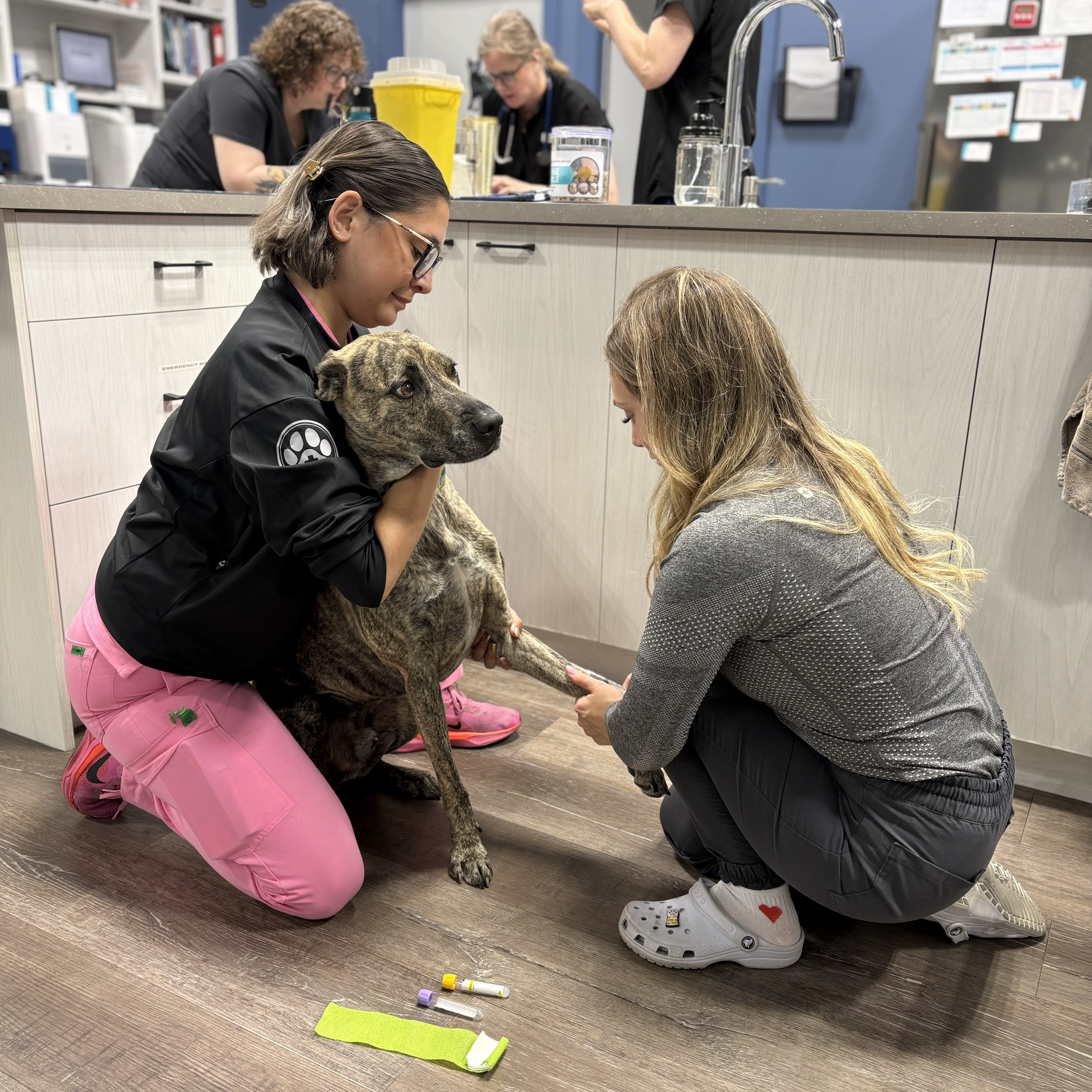
Why is pre-anesthetic blood work important for your pet?
When your pet needs to undergo general anesthesia (GA), you want to know that they are in the safest hands possible. A thorough physical examination is an important part of preparing for anesthesia, but there is more to your pet's health than what we can see on the outside.
The results of your pet’s blood work gives our team valuable information that helps us prepare properly for your pet’s procedure.
Blood work can tell us if there are changes to your pet’s health ‘behind the scenes’.
Before we anesthetize your pet, we want to ensure their organ function is adequate, and ready to handle the medications used during their procedure. Our pre-GA panel will assess your pet’s liver and kidney function, blood count, as well as a number of other factors that help us piece together a clear understanding of your pet’s health.
Liver function: The liver plays an important role in processing many medications, including some anesthetic drugs.
Kidney function: The kidneys are responsible for filtering waste products from the blood and play an important role in maintaining fluid balance.
Blood count: a CBC (complete blood count) analyzes white and red blood cell volume, as well as platelets. Changes to these values can indicate infection, inflammation, or other disease processes taking place.
Forming a ‘baseline’
Pre-anesthetic blood work can also provide a valuable baseline for your pet.
A baseline gives us an idea of what is normal for your individual pet. If blood work is performed again in the future, we can compare the new results with previous values and look for changes or trends over time.
This can be particularly helpful as pets get older or if they develop an illness later in life.
What happens if we find something unexpected?
Finding an abnormal blood value does not necessarily mean your pet cannot have their procedure. Instead, it gives our team more information to work with.
Depending on the results, we may be able to:
- Adjust your pet's anesthetic plan (including using different medications or doses and taking additional precautions)
- Provide additional monitoring or supportive care prior, during, and after their procedure
- Recommend further testing before proceeding
- Postpone or cancel an elective procedure if we feel it is safest to do so
The goal is not to create unnecessary worry—it is to make sure we have as much information as possible before making decisions about your pet's care.
At Mission Creek Animal Hospital, all our dental procedures require pre-anesthetic blood work, given that these procedures can be lengthy, and are typically on more senior pets. As pets age, they may be more likely to develop changes in organ function or other health conditions.
For procedures such as a spay or neuter, or any other elective procedure, blood work will normally be optional to the owner, unless otherwise directed by your pet’s veterinarian.
Anesthesia is safer than ever, thanks to advances in veterinary medicine, modern monitoring equipment, and careful anesthetic protocols. However, every anesthetic procedure carries some level of risk, and our goal is to identify and minimize those risks as much as possible.
Pre-anesthetic blood work is one of the tools we use to better understand your pet's health before anesthesia. It helps us prepare, make informed decisions, and provide care that is tailored to your individual pet.
Because when it comes to anesthesia, the more we know, the better we can prepare.
Posted on:
Thursday, August 6, 2026
in
Preventative Care
category.

